When Do Puppies Stop Biting?
Most puppies bite far less between 4 and 6 months, as the adult teeth come in. The timeline by age, what speeds it up, and when biting is worth real help.
Updated September 26, 2026 · By Tiny Builder

Quick answer
Most puppies bite far less between 4 and 6 months, as teething finishes and the adult teeth come through. Puppy teeth start being replaced at about 3 to 4 months and the adult set is usually complete by 6 months. Play biting fades over weeks, and how consistently the household responds decides how quickly.
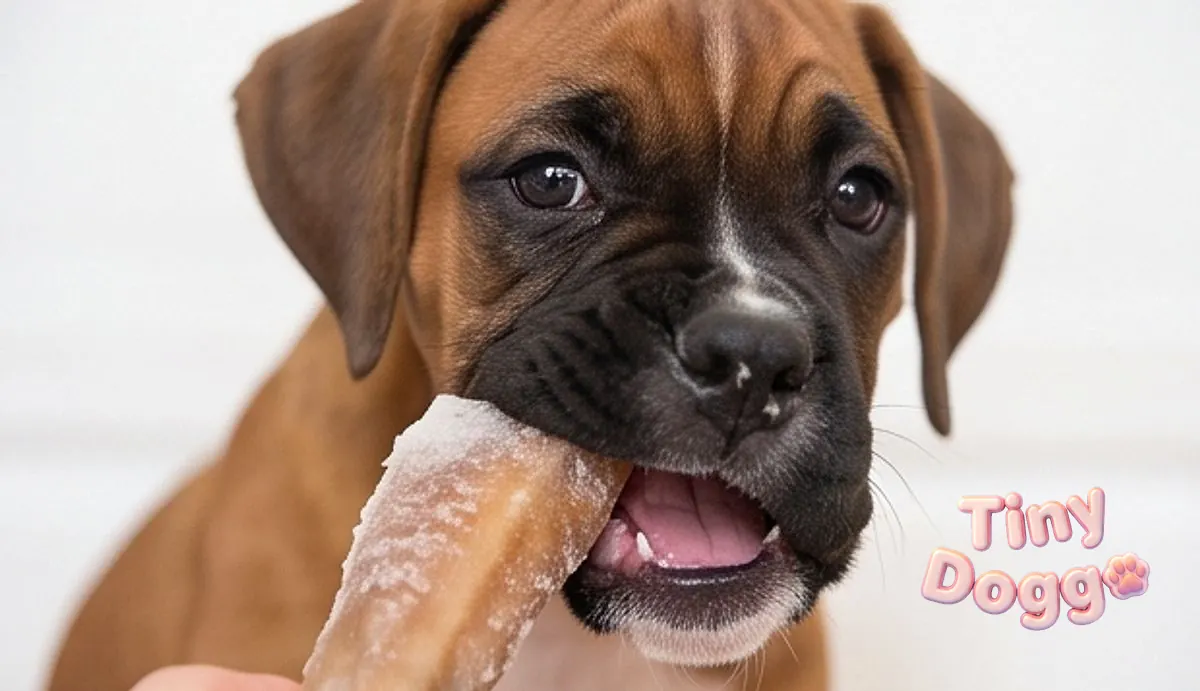
Two things are happening at once, and they end at different times. Teething is physical and finishes on its own. Play biting is social, and it fades as your puppy learns what teeth cost her.
The timeline
| Age | What is going on |
|---|---|
| 8 to 12 weeks | Constant mouthing. Needle teeth, no self-control yet, and everything goes in the mouth |
| 3 to 4 months | Teething starts. Puppy teeth fall out, chewing gets urgent, biting often peaks |
| 4 to 6 months | Adult teeth come through and mouthing drops off noticeably |
| 6 months | All 42 adult teeth usually in. Biting should be rare and soft by now |
| 6 to 12 months | Adolescence. Occasional relapses when she is excited or tired, not a return to square one |
What actually speeds it up
- The same response every time. Teeth on skin ends the game, from everyone in the house. The method is in how to stop a puppy biting.
- Enough sleep. Overtired puppies bite hardest, and a nap fixes more evenings than training does.
- Something legal to chew, especially something cold while she is teething.
- Play that is not about hands. Tug and fetch give her a way to use her mouth with rules attached.
What slows it down
Wrestling with hands, shouting, physical corrections, and one person in the house who thinks it is funny. Each of those either teaches her hands are toys or makes her more wound up, and the second is what usually turns a six week phase into a six month one.
When it is not just a phase
Past 6 months, biting that is still frequent and hard deserves professional eyes. So does biting that is not playful at any age: stiff body, growling over food, toys or space, or bites that land in anger rather than in a game. Your vet can rule out pain first, then a qualified trainer or behaviourist can help. That is not a failure on your part, it is the same thing you would do about any other problem you cannot see the cause of.
While you wait it out, the rest of the routine still matters: a daily schedule with real naps removes most of the worst evenings.
Questions people ask
At what age do puppies stop biting?
Most puppies get noticeably less mouthy between 4 and 6 months, as the adult teeth finish coming in. Play biting fades gradually rather than stopping on a particular day, and how you respond decides how fast.
Do puppies grow out of biting on their own?
Partly. Teething ends by itself, but bite inhibition is learned. A puppy who is never told that teeth end the game keeps mouthing as an adult, when it is much less charming.
Is puppy biting at 5 months normal?
It is common, and usually the tail end of it. By 6 months it should be fading fast. If it is still frequent and hard after that, get a trainer involved.
When do puppies lose their teeth?
Puppy teeth start falling out around 3 to 4 months, and the 42 adult teeth are usually all through by about 6 months.
Why is my 4 month old puppy biting more, not less?
Teething peaks around then, and so do adolescent testing and missed naps. Check she is sleeping enough, keep the rules identical across the household, and give her something cold to chew.
This guide is general information, not veterinary advice. Every puppy is different. If something seems off, like straining, blood, or a sudden change in how often your puppy goes, call your vet.