How Much Do Puppies Sleep? Hours by Age
Puppies sleep 18 to 20 hours a day at first. How much sleep by age, a normal nap pattern, the signs of an overtired puppy, and how sleep ties to potty breaks.
Updated September 26, 2026 · By Tiny Builder

Quick answer
Young puppies sleep 18 to 20 hours a day, according to the American Kennel Club, in naps of 30 minutes to 2 hours through the day plus a long stretch at night. PetMD gives 12 to 20 hours across puppyhood. Most of it is not optional: sleep is when a puppy grows and when the day's training sticks.
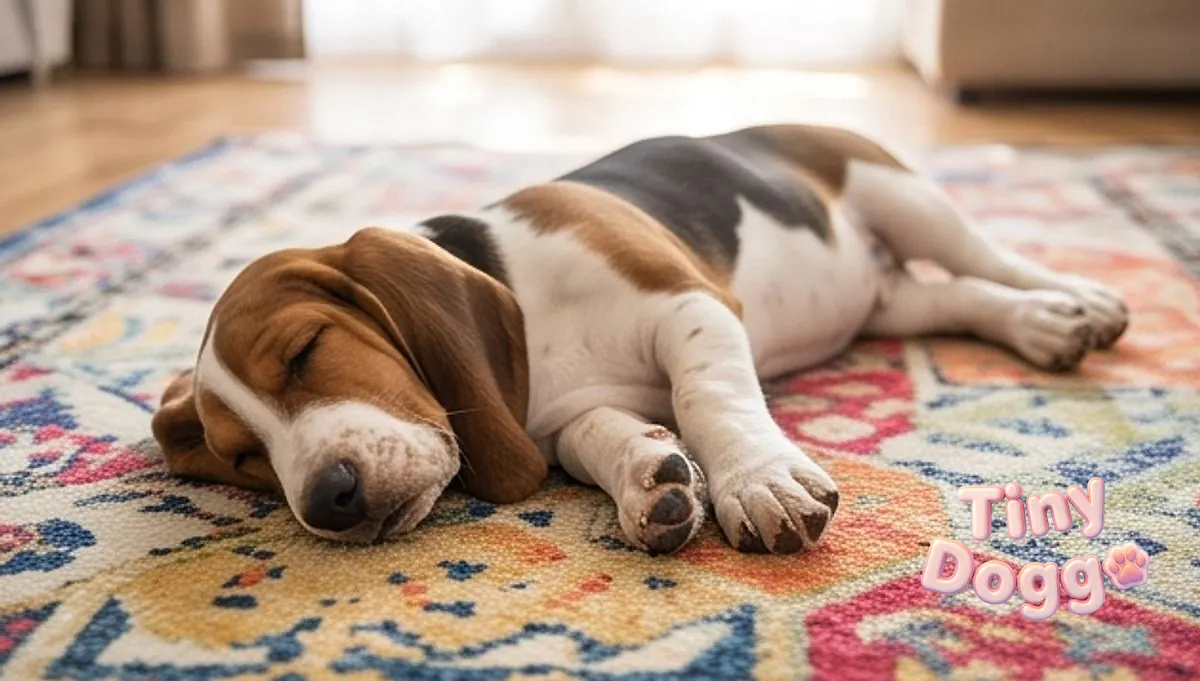
New owners are often surprised twice: first by how much a puppy sleeps, then by how wild she gets when she misses it. Both come from the same place. A puppy's body is doing a lot of building, and the building happens while she is asleep.
Sleep by age
| Age | Total sleep a day | What the nights look like |
|---|---|---|
| 8 to 12 weeks | About 18 to 20 hours | One or two toilet trips most nights |
| 3 to 4 months | About 16 to 18 hours | Often one trip, sometimes none |
| 4 to 6 months | About 14 to 16 hours | Usually straight through |
| Adult dog | About 12 to 14 hours | Straight through, plus daytime dozing |
These are averages, and breed, size and how busy the household is all move them. The shape matters more than the number: lots of short naps early on, joining up into longer stretches as she grows.
What a normal day looks like
The AKC describes puppies napping roughly every hour, for anything from half an hour to two hours, usually straight after something active. Play, then sleep, then out to the toilet, then eat, then play again. That loop is the whole day at eight weeks.
Sleep and potty breaks are the same problem
Waking is when a puppy needs the toilet, every time. A puppy who wakes from a nap needs out within a minute or two, which is why a potty schedule is really a nap schedule with a toilet trip stapled to each end. If you know when she sleeps, you know when she goes.
Signs of an overtired puppy
- Biting that gets harder and more frantic rather than softer.
- Zoomies at the same time every evening, usually just when you want quiet.
- Ignoring cues she knew perfectly well an hour ago.
- Grabbing at hands, trousers and furniture without settling on anything.
The fix is a nap in a quiet, boring place, not more exercise. A crate or pen helps here, because a puppy who cannot switch off often needs the choice taken away.
When sleep is worth a vet call
Ring your vet if a puppy is hard to wake, sleeps through meals, suddenly sleeps far more than her normal, or is lethargic alongside vomiting, diarrhoea or not eating. Young puppies go downhill quickly, and tiredness with any other symptom is not a wait and see.
Next: how to get a puppy to sleep through the night, and what to do when she cries at night.
Questions people ask
How many hours a day do puppies sleep?
The American Kennel Club puts it at 18 to 20 hours a day for young puppies. PetMD gives a wider range of 12 to 20 hours, which covers older puppies as they grow out of it.
How long do puppies sleep at night?
Six to ten hours in total, broken by one or two toilet trips at first. The night gradually joins up as her bladder grows, and most puppies manage it in one stretch by about 4 months.
Is it normal for a puppy to sleep all day?
Yes. Napping every hour or so, for half an hour to two hours at a time, is normal. What is not normal is a puppy who is hard to rouse, off her food, or suddenly flat after being lively, which is worth a vet call.
Should I wake a sleeping puppy?
Only if the nap is wrecking the night, or she has slept past a toilet break she needs. Otherwise let her sleep. Growth and learning both happen during it.
Why does my puppy get crazy in the evening?
Usually overtiredness, not spare energy. A puppy who has missed naps goes wild rather than quiet, the same way a toddler does. Try an earlier nap in a quiet place instead of more exercise.
This guide is general information, not veterinary advice. Every puppy is different. If something seems off, like straining, blood, or a sudden change in how often your puppy goes, call your vet.