Puppy Feeding Schedule by Age: How Often and When
How often to feed a puppy at every age, meal times that fit the potty schedule, when to drop from four meals to three to two, and how soon after eating she needs out.
Updated September 26, 2026 · By Tiny Builder

Quick answer
Feed four meals a day from 6 to 12 weeks, three from about 3 to 6 months, and two from 6 months onwards, at set times, lifting the bowl after 15 minutes. Put the last meal about four hours before bed, and take her out within half an hour of every meal.
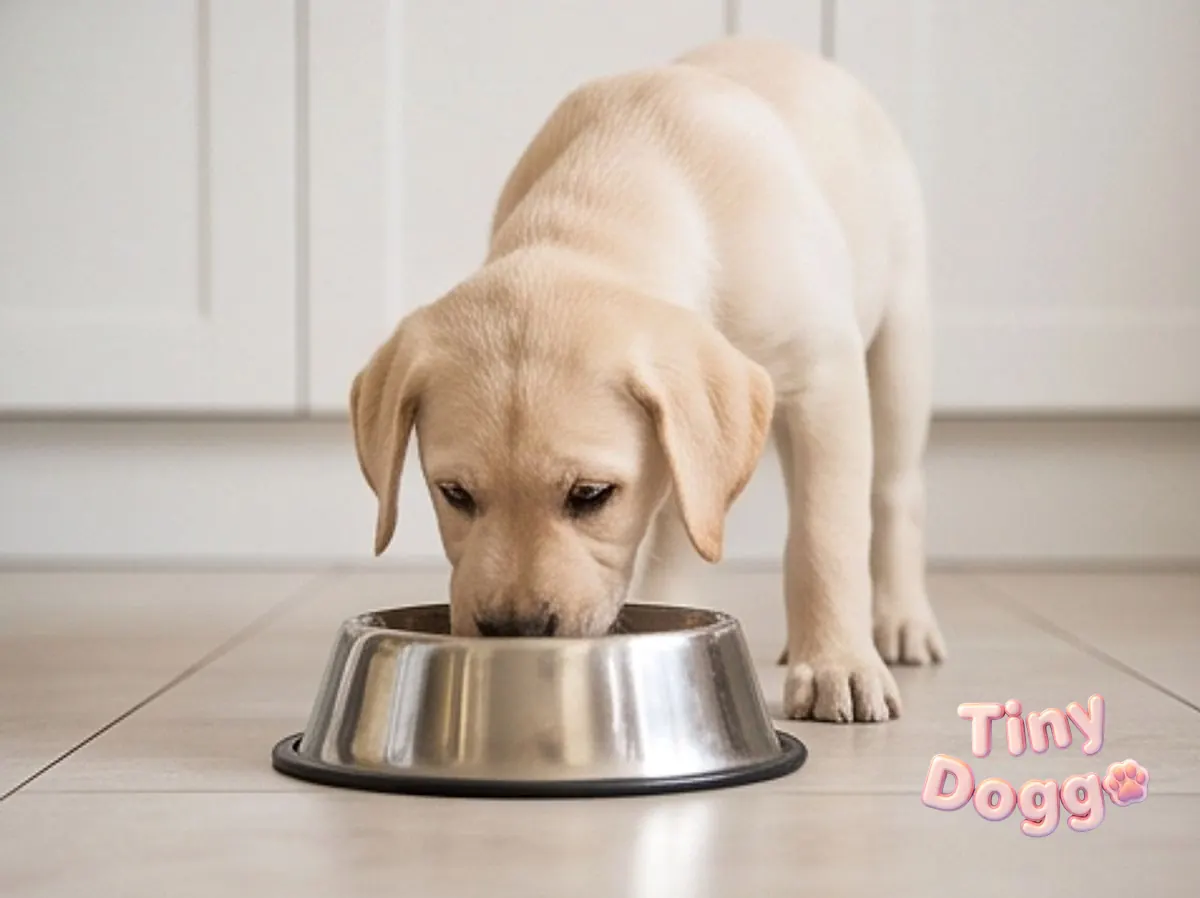
Meals are the lever most people overlook in house training. What goes in comes out on a fairly predictable clock, so a regular feeding schedule gives you a regular potty schedule, and a puppy who eats whenever she likes will go whenever she likes.
Meals a day, by age
| Age | Meals a day | Notes |
|---|---|---|
| 6 to 12 weeks | 4 | Toy breeds often need 4 to 6, because they run out of fuel fast |
| 3 to 6 months | 3 | Drop the fourth meal somewhere in here, usually the late one |
| 6 to 12 months | 2 | Morning and evening, which most dogs keep for life |
| Over 12 months | 2 | Small breeds move to adult food at 7 to 9 months, large breeds at 12 to 14 |
A feeding day that fits the potty schedule
Times matter as much as amounts. This is a four-meal day for a young puppy with a 10pm bedtime, and it is built so the last meal has cleared before the night.
| Time | What happens |
|---|---|
| 7:00 | Out first, then breakfast. Out again within 30 minutes |
| 11:30 | Second meal, then out |
| 15:30 | Third meal, then out |
| 18:00 | Last meal, about four hours before bed, then out |
| 20:00 | Water bowl up, unless your vet has said otherwise |
| 22:00 | Final trip out, then bed |
The 15 minute rule
Put the bowl down, give her 15 minutes, then lift whatever is left until the next meal. The AKC recommends it to stop picky habits forming, and it has a second benefit: you always know when she last ate and how much, which makes both the timing of the next poo and any change in appetite obvious.
How much food
Start with the guide on the packet for her age and expected adult weight, then adjust to what you see. Ribs you can feel but not see is the usual target. Puppies grow in bursts, so the right amount this month is often not the right amount next month, and a vet check is the sensible place to confirm it.
Water
Fresh water available all day, with the bowl lifted an hour or two before bed while she is young, and a last drink offered with the final trip out. If she is very young, unwell or on medication, ask your vet before restricting water at all.
What changes when meals change
Every time you drop a meal, the potty pattern shifts for a few days. Expect the old meal time to still produce a request to go out for a while, and expect the poo count to drop as meals consolidate. Our guide on how often puppies poop has the counts by age, and the daily schedule shows how meals, naps and breaks fit together.
Questions people ask
How often should I feed a puppy?
Four meals a day from 6 to 12 weeks, three from about 3 to 6 months, and two from 6 to 12 months onwards, according to the American Kennel Club. Toy breeds often need more, up to 4 to 6 meals a day in the first months.
What time should a puppy eat?
Around the times your household already eats, which keeps it consistent, with the last meal roughly four hours before bed so she can empty out before the night.
How long after eating does a puppy need to poop?
Usually 5 to 30 minutes, and sooner in young puppies. Take her out straight after every meal rather than waiting for a signal.
Should I leave food down all day?
No. The AKC suggests feeding at set times and lifting the bowl after 15 minutes. Free feeding makes the potty schedule unpredictable, and it hides a lost appetite, which is often the first sign a puppy is unwell.
How much should I feed my puppy?
Start with the amount on the food packet for her age and expected adult weight, then adjust to the dog rather than the chart. The AKC puts it simply: watch the dog, not the dish. Your vet will tell you at each check whether she is carrying the right amount.
This guide is general information, not veterinary advice. Every puppy is different. If something seems off, like straining, blood, or a sudden change in how often your puppy goes, call your vet.