How to Potty Train a Puppy With Pads (and Move Outside Later)
When puppy pads make sense, how to set them up, how to teach your puppy to use them, and how to move from pads to outside without starting over.
Updated September 21, 2026 · By Tiny Builder
Quick answer
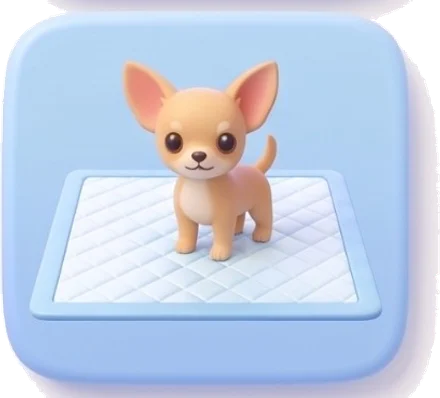
Put a pad in one fixed, easy-to-clean spot, take your puppy to it at the times she usually needs to go, say a cue like “go potty”, and reward her the moment she uses it. Supervise her the rest of the time. When you are ready for outside, move the pad toward the door a little each day, then outside to her new spot.
Puppy pads are a tool, not a shortcut. They make life easier when getting outside quickly is not realistic, but they come with a catch: a puppy who learns to go on something soft indoors has one more habit to unlearn later. Used with a plan, they work well.
When puppy pads make sense
- You live high up, or getting outside takes minutes you do not have.
- She is home alone longer than she can hold it.
- She is a very small dog and the weather is harsh.
If none of these apply, the American Kennel Club notes that pads can slow down the move to going outside, so outdoor training from day one is usually the simpler path.
How to potty train a puppy with pads
- Pick one spot. A quiet corner with an easy-to-clean floor, like tile. Near the door is ideal if you plan to move outside later.
- Keep the pad in the same place. Moving it around confuses her.
- Take her to it at the key moments: after waking, eating, drinking and play, and on a schedule sized to her age.
- Use a cue like “go potty” as she starts, and reward her the moment she finishes.
- Supervise and limit her space until she is reliable, just as with outdoor training.
- Clean misses with an enzymatic cleaner so she is not drawn back to the wrong spot.
Moving from pads to outside
- Move the pad a little closer to the door each day.
- Then place it just outside the door.
- Then move it to the outdoor spot you want her to use, making it smaller as you go.
- Take a used pad to the new spot at first, so it smells right.
- Keep the same cue, so she knows the job has not changed, only the place.
Expect a few accidents during the switch. Go back to more frequent breaks for a week or two, and use the potty training schedule as your guide.
Pads or outside: which is faster?
Teaching one place once is usually faster than teaching two. If you can go outside, start there. If you cannot yet, pads are fine, as long as you plan the move outside rather than hoping it happens. For accidents on rugs and carpets, see how to stop a puppy peeing in the house.
Questions people ask
Should I use puppy pads?
They help when getting outside quickly is hard: a high-rise flat, long working days, or a very small dog in bad weather. The downside is that they can slow the move to going outside, so if you can take her out, outdoor training from the start is usually simpler.
How do I train my puppy to pee on a pad?
Put one pad in a fixed, easy-to-clean spot, take her to it at the same moments you would take her outside (after waking, eating, drinking and play), use a cue like “go potty”, and reward her the moment she finishes on it. Supervise the rest of the time.
How do I move from pads to going outside?
Move the pad gradually: a little closer to the door each day, then just outside it, then to the outdoor spot, making it smaller as you go. Taking a used pad to the outdoor spot helps her recognise it.
Why does my puppy pee next to the pad?
Usually the pad is too small for her aim, or she only half understands the target. Use a bigger pad or two side by side, then shrink back once she is reliable.
This guide is general information, not veterinary advice. Every puppy is different. If something seems off, like straining, blood, or a sudden change in how often your puppy goes, call your vet.